What Is Network Switching? A Complete Guide
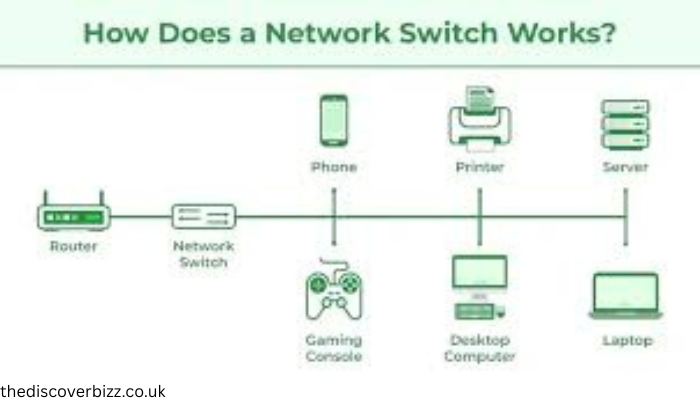
What Is Network Switching? A switch is a crucial hardware component in network infrastructure responsible for executing the switching process by connecting various network devices, like computers and servers. It allows multiple devices to share the network without their traffic interfering with each other, functioning similarly to a traffic cop at a busy intersection.
Upon receiving a data packet at one of its ports, the switch identifies its intended direction and forwards it through the appropriate port to reach its destination. Data packets may originate from directly connected devices, such as computers or VoIP phones, or indirectly from devices connected through other network elements like hubs or routers. The switch maintains awareness of the devices connected within the network, enabling it to transfer data packets directly between them.
How has technology for switching changed?
Advanced switches are now integral to network infrastructure, functioning both as switches and routers. They eliminate the need for some additional hardware by incorporating essential features such as built-in security capabilities that were once provided by dedicated firewalls. Additionally, multigigabit switches can adjust speeds to accommodate the throughput demands of wireless access points, enhancing Wi-Fi connectivity for devices like laptops and mobile phones. Innovations in Power over Ethernet (PoE) allow these switches to deliver up to 90 watts of power per port over standard copper Ethernet cables.
How Does Switch Work?
Reception of data frames by a switch initiates a series of processes essential for proper data forwarding. First, the switch extracts the destination MAC address from the frame’s header. Subsequently, it performs a lookup in its MAC address table to identify the correct port associated with the destination MAC address. If no match is found, the switch engages in flooding, disseminating the data frame to all ports except the originating one. During this process, the switch records the MAC addresses of all ports receiving the frame to update its forwarding table. Once the destination port is determined, the switch forwards the data frame to the designated target device or network.
Types of switches
- Unmanaged switches: Basic connectivity, limited capacity, “plug and play” setup, suitable for small networks without critical security or availability needs.
- Managed switches: Require configuration, are designed for large, complex networks, offer reliability, security, increased capacity, operational flexibility, network analytics, simplified management, and automated software updates.
- Fixed switches: Have a fixed number of downlink ports (8, 12, 24, or 48), can provide power to devices, modular uplink ports for throughput upgrades, stackable for combined operation, suitable for up to 144 ports.
- Modular switches: Customizable with 4, 7, or 10 slots for various types of ports, allowing configuration to meet specific organizational networking needs.
Why Is Switching Essential?
- Bandwidth is the maximum transmission rate of a cable and is a crucial yet costly resource, necessitating switching for effective utilization.
- Collision occurs when multiple devices transmit on the same physical medium, leading to message impacts; switching is required to prevent packet collisions.
Conclusion
Network switching is the backbone of modern communication systems. It allows data to move smoothly from one network to another without confusion or overload.
Switches and switching techniques help manage traffic, improve speed, and make networks scalable. Each switching technique has its own role, and together they make large networks function properly. Without switching, computer networks would be slow, inefficient, and difficult to manage. Read more
Share this content:














Post Comment